
USCIS Immigration Medical Exam (Form I-693) in Miami Shores: What to Bring and What to Expect
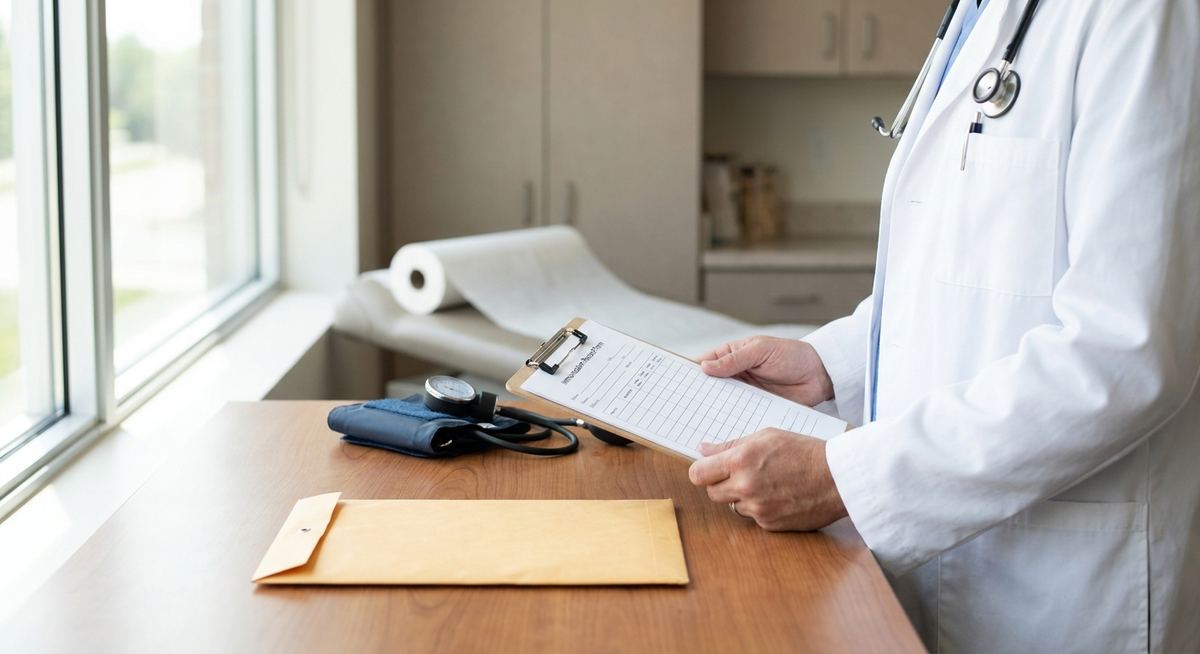
If you are adjusting status in South Florida, the immigration medical exam is often the one step people know the least about — and worry about the most. The good news: it is a straightforward, routine visit that most people finish in a single appointment. Here is exactly what Form I-693 is, who needs it, what happens in the room, and what to bring so you leave with everything done right the first time.
What Form I-693 Actually Is
Form I-693, Report of Immigration Medical Examination and Vaccination Record, is the form USCIS uses to confirm that an applicant does not have a health condition that would make them inadmissible under U.S. immigration law. It is not a test you pass or fail in the way people imagine, and it is not a general physical for your employer or your school. It is a defined screening with a defined checklist.
Most people filing Form I-485 (Adjustment of Status) need an I-693. Some applicants — including certain refugees, asylees, and applicants who already completed an overseas exam recently — may have different requirements. Because the rules change based on your category and filing date, always check the current instructions on the official USCIS Form I-693 page before you book.
Only a USCIS-Designated Civil Surgeon Can Complete It
This is the single most important thing to understand, and the most common reason applicants have to repeat and re-pay for the exam.
Form I-693 must be completed and signed by a physician who holds an active USCIS “civil surgeon” designation. A regular primary care doctor, a walk-in clinic physician without the designation, or a specialist you already trust cannot sign the form — even if they perform the exact same tests. USCIS will reject the form.
Before you schedule anywhere, verify the designation using the official USCIS civil surgeon locator, which lets you search by ZIP code for designated physicians near Miami Shores, North Miami, El Portal, and Biscayne Park. If you are interested in scheduling with our office, please call ahead to confirm availability and scheduling for immigration exams so we can point you in the right direction and make sure your visit is set up correctly. You can find our team details on our staff page or reach us through our contact page.
What Happens During the Visit
The appointment itself is usually calm and quick. Expect roughly four parts:
1. Medical history review. You will be asked about past illnesses, hospitalizations, surgeries, mental health history, current medications, and any history of substance use. Answer honestly — the goal is documentation, not judgment, and inconsistencies cause delays.
2. Physical examination. A standard head-to-toe exam: vital signs, eyes, ears, throat, heart and lung listening, abdomen, lymph nodes, skin, and general assessment. Nothing invasive or unusual.
3. Required screenings. Applicants in the required age ranges are screened for tuberculosis, and for syphilis and gonorrhea. TB screening is typically a blood test (IGRA) for applicants age two and older; if a screening result is positive or unclear, a chest X-ray is the standard next step, which is why on-site X-ray and diagnostic services can save you a second trip across town. Positive screening results do not automatically mean a denied application — they mean additional evaluation and, when needed, treatment.
4. Vaccination review. The physician reviews your records against the CDC’s required vaccine list for immigration purposes and administers anything you are missing or updates what has lapsed.
What to Bring to Your Appointment
Bring more than you think you need. Missing paperwork is the number one cause of a second visit.
- Government-issued photo ID — passport preferred; a state ID or driver’s license also works
- Your complete vaccination record, in any language, from any country — original or certified copy
- Prior TB test results, including any past positive skin test or IGRA, plus chest X-ray reports and treatment records if applicable
- A list of your current medications, with doses
- Records for any chronic condition you are managing — diabetes, hypertension, asthma, epilepsy, or a mental health diagnosis
- Your A-Number (Alien Registration Number), if you have one
- Health insurance card or payment method, since immigration exams are generally not covered by insurance
If you cannot find your childhood vaccination records, do not cancel the appointment. Missing doses can usually be given at the visit or confirmed with a blood titer.
The Vaccinations USCIS Looks For
The required list is set by the CDC and updated periodically. It generally includes vaccines such as MMR, Td or Tdap, polio, varicella, hepatitis A and B, influenza (seasonal), and COVID-19 requirements as currently published. Requirements vary by age, and some can be waived for medical reasons or if a vaccine is not age-appropriate. The authoritative source is the CDC’s immigrant and refugee health guidance, which publishes the technical instructions civil surgeons follow.
The Sealed Envelope, Validity, and Turnaround
Once the exam and screenings are complete, the physician signs the form and places it in a sealed envelope. Do not open it. An opened envelope is considered invalid, and you will need a replacement copy. Most offices will also give you an unsealed photocopy for your own records — ask for one.
Turnaround depends on lab results. If your TB blood test and blood work come back clean and your vaccinations are current, many applicants receive the sealed form within a few business days to about a week. If a chest X-ray, additional testing, or a vaccine series is needed, it can take longer.
On validity: under current USCIS policy, a properly completed I-693 signed by a civil surgeon does not expire — a shift from the older two-year rule. Because policy has changed more than once, confirm the current standard on the USCIS site before filing, and file your form as promptly as you reasonably can.
Making the Visit Easy
A little planning goes a long way. Come with your documents organized, eat normally beforehand unless told otherwise, and build in time for the visit — the exam is short, but paperwork and labs add minutes. Our Know Before You Go guide walks through what to expect at any appointment with us, and our immigration examinations page covers this service in more detail.
Schedule Your Immigration Exam in Miami Shores
Medi-Station Urgent Care is a neighborhood walk-in clinic serving Miami Shores and the surrounding communities, with on-site diagnostics, extended hours, and a team led by board-certified emergency physician Dr. Carlos Sanchez. If you need an immigration medical exam, call ahead to confirm availability and scheduling for immigration exams, and verify civil surgeon designation through the USCIS locator before your visit. You can also learn more about our urgent care services in Miami Shores — we are here when you need us, no appointment required for standard visits.
Medi-Station Urgent Care — Miami Shores, FL · Mon–Fri 9am–8pm, Sat–Sun 10am–5pm · https://www.medistationurgentcare.com